

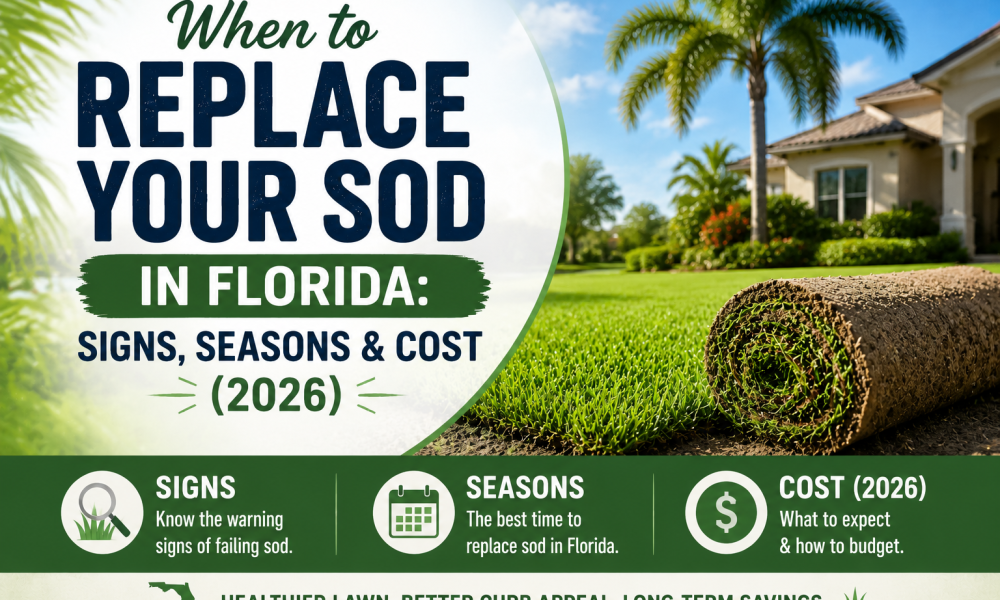
You water it. You fertilize it. You spray for weeds. And yet your lawn still looks tired, patchy, or like it never quite recovered from last summer’s heat. At some point, every Central Florida homeowner asks the same question: do I keep babysitting this lawn, or do I just replace the sod?
There is no universal answer, but there are clear signs that tell you when patching is a waste of money and when fresh sod is the right call. After installing sod for thousands of homeowners across DeBary, Deltona, and Orange City, the team at Local Sod and Landscape has seen every version of this story. Here is how to tell where your yard stands.
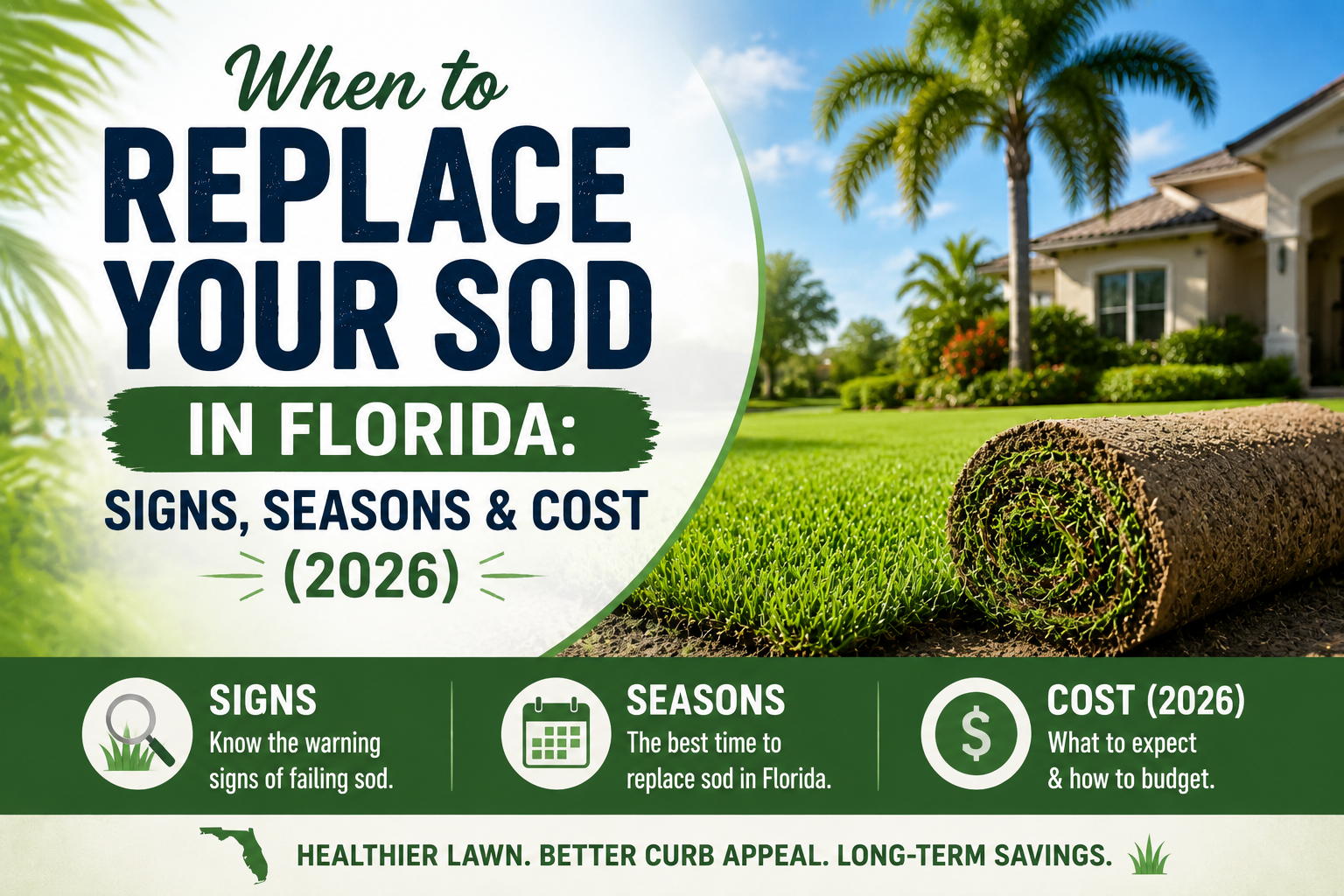
7 Signs Your Lawn Needs New Sod
1. More than 40 percent of the lawn is bare or weeds
A healthy lawn can handle some bare patches and seasonal weed pressure. But once weeds and dirt cover roughly 40 percent or more of the yard, you are no longer maintaining a lawn. You are maintaining a weed bed with grass in it. At that point, herbicides and overseeding will not catch up. Fresh sod restarts the clock with a clean, weed-free surface.
2. The grass does not green up in spring
Central Florida lawns wake up between late February and mid-April. If you are well into May and large sections are still brown or thin, the root system is likely dead. Healthy roots produce green shoots within a few weeks of warm weather and rain. Roots that are gone do not come back, no matter how much fertilizer you throw at them.
3. Persistent fungal disease or pest damage
St. Augustine is prone to chinch bugs, sod webworms, and brown patch fungus. If you have treated the same areas year after year and the damage keeps returning, the underlying turf may simply be too weak. Fresh sod, especially a chinch-bug resistant variety like Empire Zoysia or CitraBlue St. Augustine, often solves the problem at the root.
4. Soil compaction and runoff
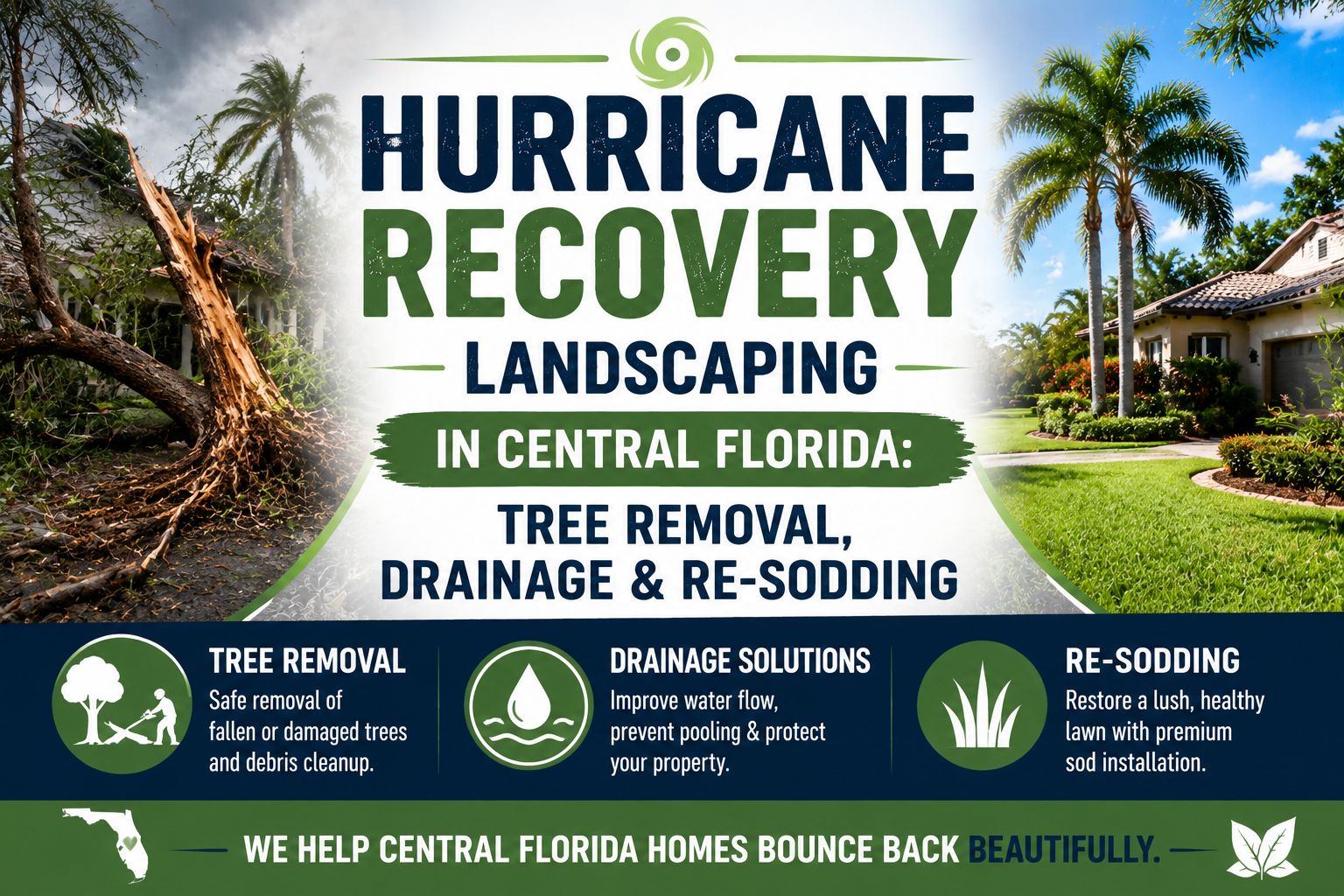
If water pools or runs off your yard during normal rain, you have compaction. Compacted soil suffocates roots and prevents new grass from taking hold. In serious cases, you may need to combine sod replacement with regrading or a French drain. We discuss drainage solutions in our hurricane recovery landscaping guide.
5. Old or wrong-fit grass
Some Central Florida homes still have older Bahia or original Floratam from decades ago. Newer cultivars like CitraBlue, Palmetto, and Empire Zoysia outperform these older types in disease resistance, drought tolerance, and color. If your lawn is more than 15 to 20 years old and was installed before modern sod varieties became common, replacement gives you a real upgrade.
6. Major construction or pool work
Pool installations, room additions, and driveway projects almost always destroy the surrounding lawn. Heavy equipment compacts the soil, fill dirt buries the original root zone, and existing grass dies under tarps and pallets. Trying to repair this kind of damage with patches almost never blends in. New sod across the affected area gives a clean, uniform finish.
7. You are selling the home
Curb appeal matters. According to multiple real estate studies, fresh sod and basic landscaping consistently return more than they cost at sale. If your yard looks rough, a new lawn is one of the fastest, most visible improvements you can make before listing.
Best Time of Year to Replace Sod in Central Florida
Florida has the longest sod installation season in the country. Unlike northern lawns, you can install most of the year here. That said, some windows are better than others.
Spring (March through May): The sweet spot
Soil temperatures are warming, rains are picking up, and you have a long growing season ahead for the roots to establish. This is the best window for St. Augustine, Zoysia, and Bahia in Central Florida.
Summer (June through September): Strong but watch the heat
Sod establishes fast in summer because of the warmth and afternoon storms. The trade-off is heat stress in the first two weeks. You will need to water twice a day for the first week and once a day for the second, no exceptions. If you have an irrigation system on a timer, summer installs work great. If you are hand-watering, spring is easier.
Fall (October through November): Solid
Cooler temperatures reduce water stress, and the grass still has enough warm weather to root before winter. Just don’t wait too late. Sod laid in December or January in Central Florida can take an extra month or two to fully knit because of cooler soil temperatures.
Winter (December through February): Possible but slower
We still install sod year-round in DeBary, Deltona, and Sanford. It just takes longer to establish, and Zoysia in particular can look brown for months before greening up in spring. Most homeowners are happier waiting until late February or March if their schedule allows.
What Does New Sod Actually Cost?
Sod replacement cost in Central Florida depends on three things: square footage, grass type, and prep work. A few realistic ranges as of 2026:
- Small front yard (1,500 to 3,000 sq ft): typically the lowest total project cost, with Floratam St. Augustine being the most affordable mid-range option
- Average residential lot (3,000 to 6,000 sq ft): the most common job size we quote in DeBary and Deltona
- Large lot (8,000 sq ft or more): per-square-foot price drops, but Bahia often becomes the most cost-effective grass
Prep work changes the picture significantly. Old turf removal, root grinding, regrading low spots, and drainage corrections can all add to the project. The good news: most homeowners only deal with these prep items once. Once your yard is properly graded and drained, future sod replacements are far cheaper.
For a side-by-side comparison of sod types and what each one costs to install, see our best sod for Central Florida lawns guide.
Patch vs. Replace: How to Decide
Spot repairs make sense when bare areas are localized, well-defined, and cover less than about 25 percent of the yard. Examples: a dead spot from a fallen branch, damage from a leaking irrigation head, or a pet path along a fence line. In those cases, we cut out the dead section, prep the soil, and lay matching sod. The repair blends in within a few weeks.
Full replacement is the better call when problems are widespread, the grass type is wrong for the conditions, or the underlying soil needs work. Trying to patch a fundamentally unhealthy yard usually means doing the same job two or three times over a few years. Replacing once, correctly, almost always costs less in the long run.
What to Expect on Installation Day
A typical sod replacement in DeBary follows a predictable sequence. Knowing what is coming makes the day go smoother for everyone.
- Day before: we measure, finalize the grass type, and confirm the schedule
- Morning of: we remove old turf, address any drainage or grading issues, and prep the soil
- Same day: pallets arrive, the crew hand-lays sod with tight seams, edges are trimmed, and the lawn is rolled
- First 24 hours: you water deeply, ideally twice that day
- First 2 weeks: water every day, taper to every other day in week 3
- Week 3 onward: switch to a normal irrigation schedule
Most full-yard replacements in our area finish in a single day. Larger projects with significant prep can run two to three days.
Should You DIY a Sod Replacement?
It is fair to ask. Sod is just rolled-up grass, after all. We have seen DIY jobs go well, and we have been called in to fix plenty of others. The honest answer depends on the size of the project and the prep work involved.
A small front yard with no drainage issues, no old sod to remove, and a flat, weed-free surface is doable as a weekend project. Rent a sod cutter, prep the soil, lay the pieces tight, and water religiously. Many homeowners pull this off the first time.
Anything more complex usually does not pencil out as a DIY job. Removing old turf, regrading, hauling away debris, ordering and transporting full pallets, and laying them within 24 hours of delivery is genuinely hard work. Sod that sits on a pallet for 48 hours in Central Florida heat is essentially compost. The labor savings disappear fast when you factor in equipment rentals, fuel, and the very real risk of losing pallets to delay.
For full-yard replacements, drainage corrections, or anything involving tree removal, professional installation is almost always cheaper end-to-end than DIY. Getting it right the first time saves a second project two years later.
Aftercare Is Where Most People Lose
We have seen beautiful sod fail in 30 days because homeowners stopped watering after the first week. Fresh sod has shallow roots. It cannot tolerate Florida heat without consistent irrigation during the establishment period. Plan for it before the install, not after.
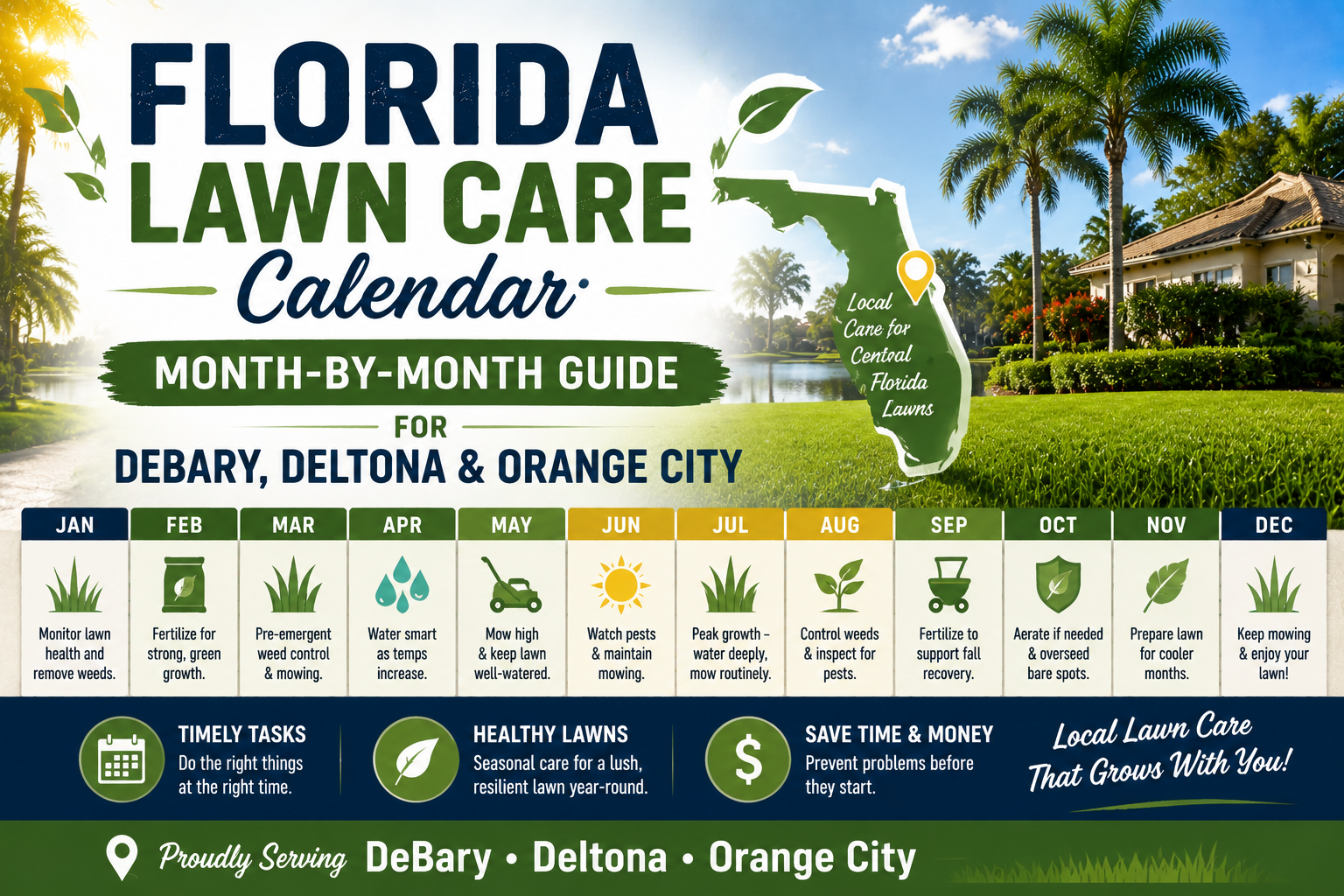
We give every customer a printed care schedule, but the short version is: water twice a day for week one, once a day for week two, and don’t mow until the sod has knitted to the soil (usually around day 14 to 21). For ongoing maintenance, follow our Florida lawn care calendar to keep your new lawn at its best.
Get an Honest Assessment of Your Lawn
We won’t sell you sod you don’t need. If patching makes more sense than replacement, we will tell you. If your real problem is drainage or sun exposure, we’ll point that out before you spend a dollar on grass.
Want a straightforward opinion on your lawn? Contact Local Sod and Landscape for a free property walkthrough. We serve DeBary, Deltona, Orange City, DeLand, Sanford, and the surrounding Central Florida communities.