

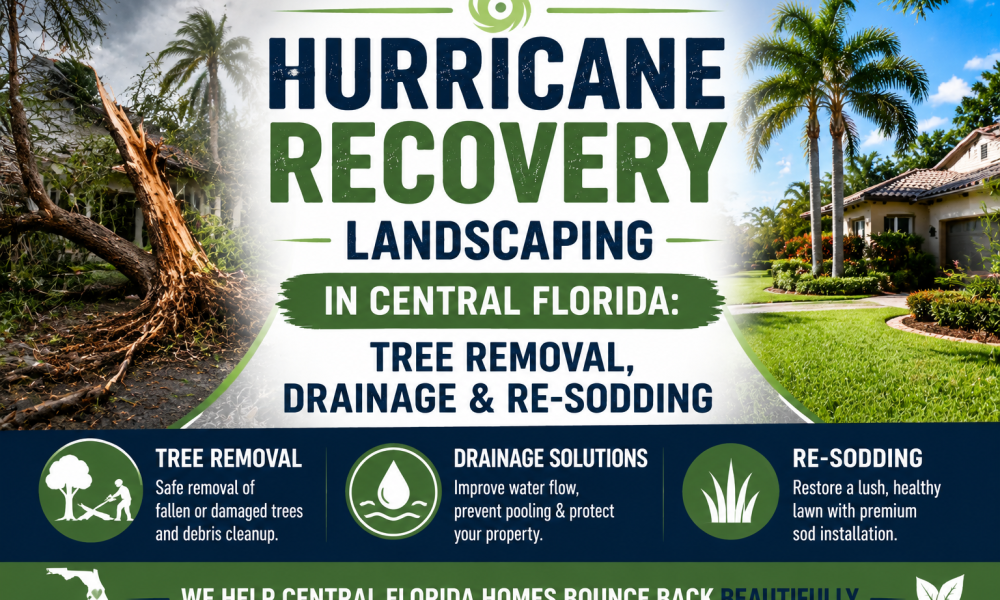
Central Florida homeowners know the drill. The wind dies down, the power flickers back on, and you walk outside to a yard that looks nothing like it did 48 hours ago. Trees down. Sod ripped up. Standing water where there was never water before. Maybe a fence panel in the pool.
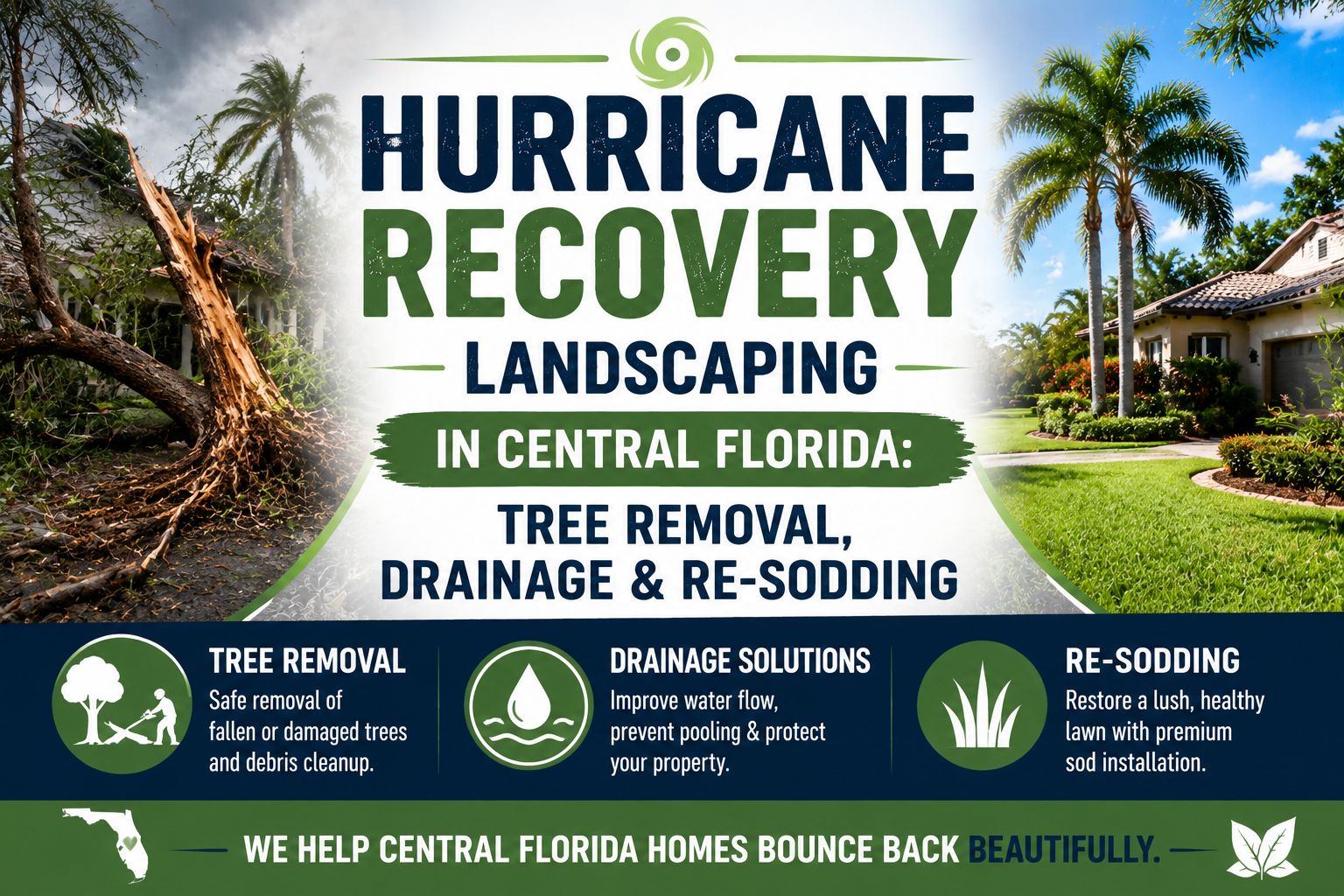
Cleanup is just the first step. Real hurricane recovery means restoring your yard so it functions properly through the next storm and the rest of the year. After Hurricane Milton, the team at Local Sod and Landscape helped dozens of homeowners across DeBary, Deltona, and Orange City put their yards back together. Here is what we learned about doing it right.
Step 1: Safety and Triage
Before any cleanup, walk the property carefully. Look for these hazards:
- Downed power lines or limbs touching utility wires (call the utility, never approach)
- Trees leaning toward the house, especially with exposed root balls
- Standing water near electrical equipment, pool pumps, or HVAC units
- Damaged fencing or structures that pets or kids could wander into
Document everything with photos before you move anything. Insurance claims move much faster when you have time-stamped images of the damage in place.
Step 2: Tree Removal and Limb Cleanup
Hurricanes do their worst damage through trees. Live oaks, pines, and laurel oaks all fail differently in high wind, and what looks fine from the ground can be a hazard you cannot see. Tree work after a storm is dangerous. Branches under tension can spring back violently, and partially uprooted trees can shift unpredictably when limbs are removed.
A few rules we follow on every storm cleanup job:
- Never cut a tree leaning on a structure without a plan to support the trunk
- Always work from the outside of the canopy inward
- Treat any tree with significant root exposure as compromised, even if the trunk looks fine
- Remove stumps if you plan to lay sod over the area, or you will have settling and dieback within a year
After Hurricane Milton, we had crews in DeBary clearing a neighbor’s 60-foot oak that was minutes from coming through a roof. That kind of work is not a DIY weekend project. If you have a tree on your house or threatening one, get a professional out the same day.
Step 3: Assess Drainage Damage
Hurricanes change yards. They wash out grading, expose root systems, deposit silt in low spots, and clog drainage channels. Standing water that lasts more than 24 hours after rain stops is the clearest sign you have a drainage problem.
Common post-storm drainage issues in Central Florida:
- Silt and debris clogging existing French drains or gutter downspout extensions
- Erosion channels cut into lawn slopes, often near downspouts or pool decks
- Compacted areas where heavy debris sat for days, killing turf and sealing the soil
- Settled soil over old septic, irrigation, or pool plumbing trenches
Ignoring drainage damage is the most expensive mistake homeowners make after a storm. New sod laid over a yard that holds water will fail within months. Fix the water problem first, then worry about the grass.
Step 4: Decide If You Need a French Drain
A French drain is a gravel-filled trench with a perforated pipe that captures and redirects water away from problem areas. They are one of the most effective fixes for chronic drainage issues in Central Florida’s clay-and-sand mixed soils.
You probably need a French drain if:
- Water pools next to your foundation after rain
- Your yard has a low spot that stays soggy for days
- Pool deck water is running back into the lawn instead of out to the street
- You see mosquito breeding in standing water that won’t drain
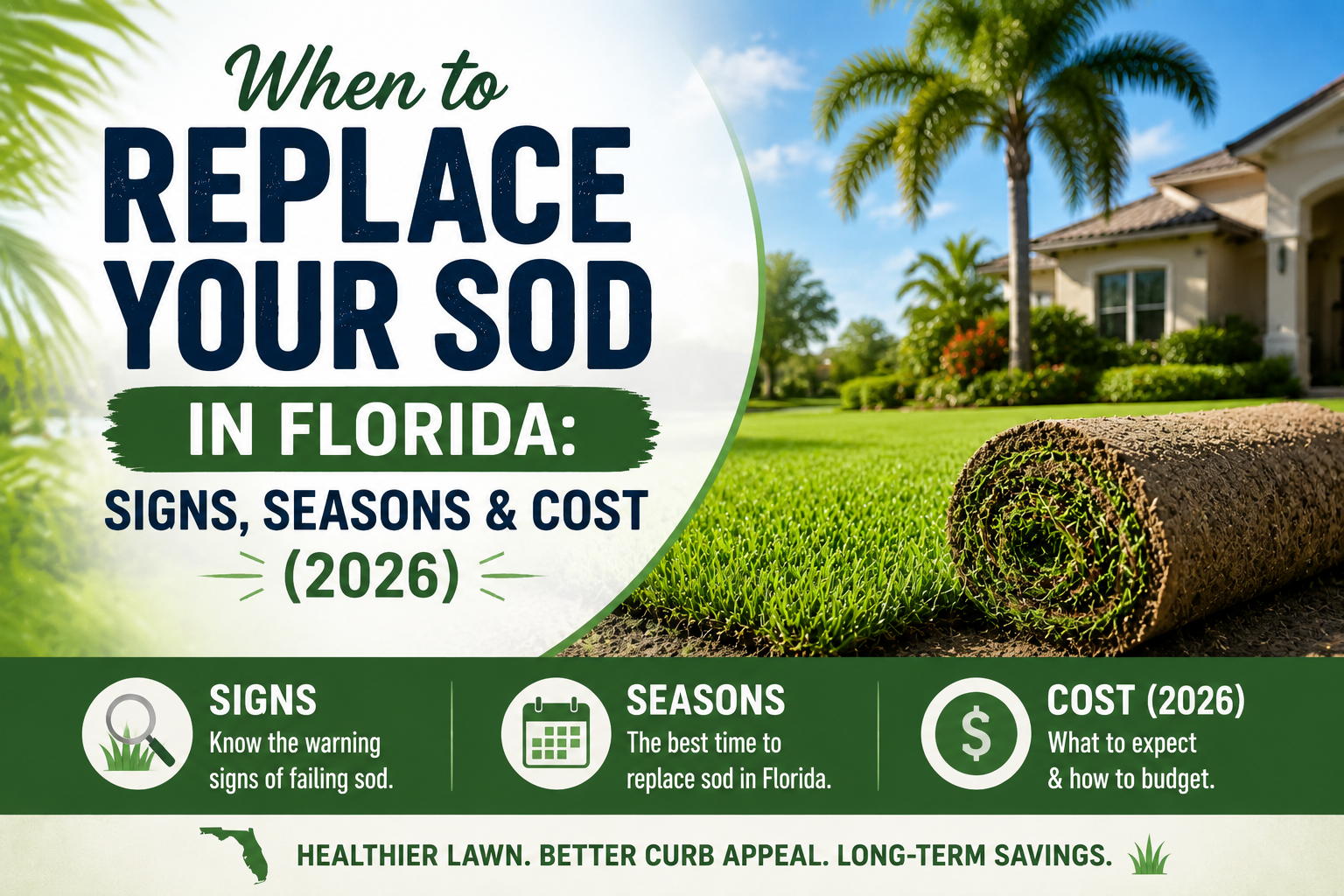
We installed several French drains in DeBary after the 2024 storm season, often combined with full sod replacement after pool construction. The combination of drainage correction, fresh sod, and new edging is one of the most common projects we handle in Volusia County. For more on when sod replacement makes sense, see our guide on when to replace your sod in Florida.
Step 5: Regrading and Soil Repair
Before laying any new sod, we always check the grade. Hurricane runoff strips topsoil from high points and dumps it in low ones. The result is a yard that drains poorly and a lawn that grows unevenly.
Proper regrading involves:
- Establishing a slope away from the house of at least 2 to 3 percent
- Filling low spots with quality fill dirt, not just yard waste or eroded soil
- Compacting fill in layers so it does not settle after sod is installed
- Smoothing the final surface so seams between sod pieces stay flat
Skipping this step is the single biggest reason post-hurricane sod jobs fail. Take the extra day, do the prep, and your new lawn will outlast the next storm.
Step 6: Re-Sodding the Damaged Areas
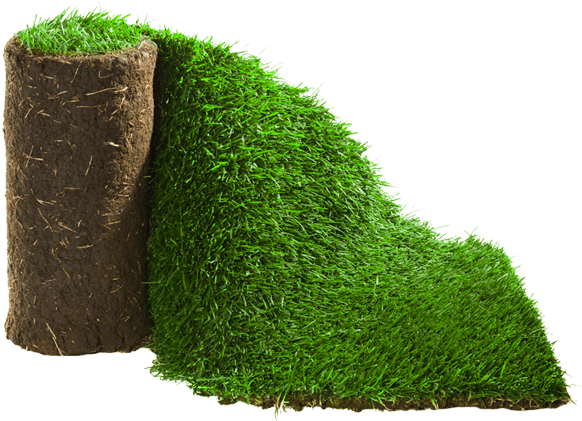
Once trees are gone, drainage is fixed, and grading is clean, sod goes down. The grass type matters here. After a major storm, you have a chance to upgrade. Many DeBary homeowners take the opportunity to switch from older Floratam to CitraBlue St. Augustine or Empire Zoysia, both of which handle modern Florida conditions better.
Things to keep in mind during a post-storm sod install:
- Sod supply tightens after major storms, so book early
- Match the new grass to your sun, soil, and irrigation, not just what the neighbors have
- Tight seams matter even more after a storm because settled soil amplifies any gaps
- Plan for two weeks of attentive watering before normal irrigation resumes
Not sure which grass is right for your yard? Our comparison of St. Augustine, Zoysia, and Bahia for Central Florida breaks down the trade-offs in plain language.
Step 7: Restore Beds, Edging, and Hardscape
Storms tend to damage everything around the lawn too. Mulch washes out, edging shifts, and rocks scatter. While the crew is on site, this is the right time to redo any of these elements:
- Replace bedding mulch and reset paver edging
- Rebuild planter boundaries and re-edge bed lines
- Reset rock or paver areas around the pool
- Replace damaged irrigation heads and check zone coverage
Doing this work in one coordinated job is far cheaper than calling separate crews for sod, drainage, and beds over multiple weeks.
Pre-Storm Prep: The Best Hurricane Recovery Is Prevention
The cheapest hurricane cleanup is the one you avoid. While there is no way to fully storm-proof a Central Florida yard, smart preparation in May and June makes a huge difference in how much damage you face in August and September.
A few prep steps that consistently pay off:
- Have large trees professionally inspected each spring, especially live oaks, laurel oaks, and pines within falling distance of structures
- Clear gutters, downspouts, and existing French drains in May before the rainy season starts
- Stake or cable any trees that have shown signs of leaning
- Anchor or store loose hardscape items, including paver edging stones and decorative rocks
- Photograph your yard, beds, and trees in good condition each spring for insurance baseline documentation
Homeowners who do this every year almost never face the kind of catastrophic damage that requires full property restoration. The ones who skip it are the ones we see calling at midnight after the storm.
Insurance and Documentation Tips
We are not insurance professionals, but after running cleanup jobs through dozens of homeowner claims, here is what we consistently see help:
- Photograph everything before, during, and after work
- Keep itemized invoices that separate tree work, drainage, sod, and other line items
- Save receipts for any temporary measures (sandbags, tarps, debris hauling)
- Get written estimates before work begins when possible, as many insurers require them
Your insurance agent is the right source for what is and is not covered, but good documentation rarely hurts a claim.
Why Speed Matters After a Storm
Post-hurricane work is a race against three things: secondary damage from compromised trees and drainage, contractor availability, and material shortages. Sod pallets, gravel, and fill dirt all get scarce within days of a major storm. Tree crews book out for weeks.
The homeowners who recover fastest are the ones who call early, document well, and pick a single contractor who can handle tree work, drainage, and re-sodding together. We did exactly that for several DeBary and Deltona families after Milton, and most yards were fully restored within two weeks of the call.
Get Your Yard Storm-Ready and Restored
Whether you are dealing with active storm damage, planning ahead before the next season, or just want a property assessment to identify weak points, we can help. The team at Local Sod and Landscape, led by David, has handled hurricane recovery work across Volusia and Seminole counties for years.
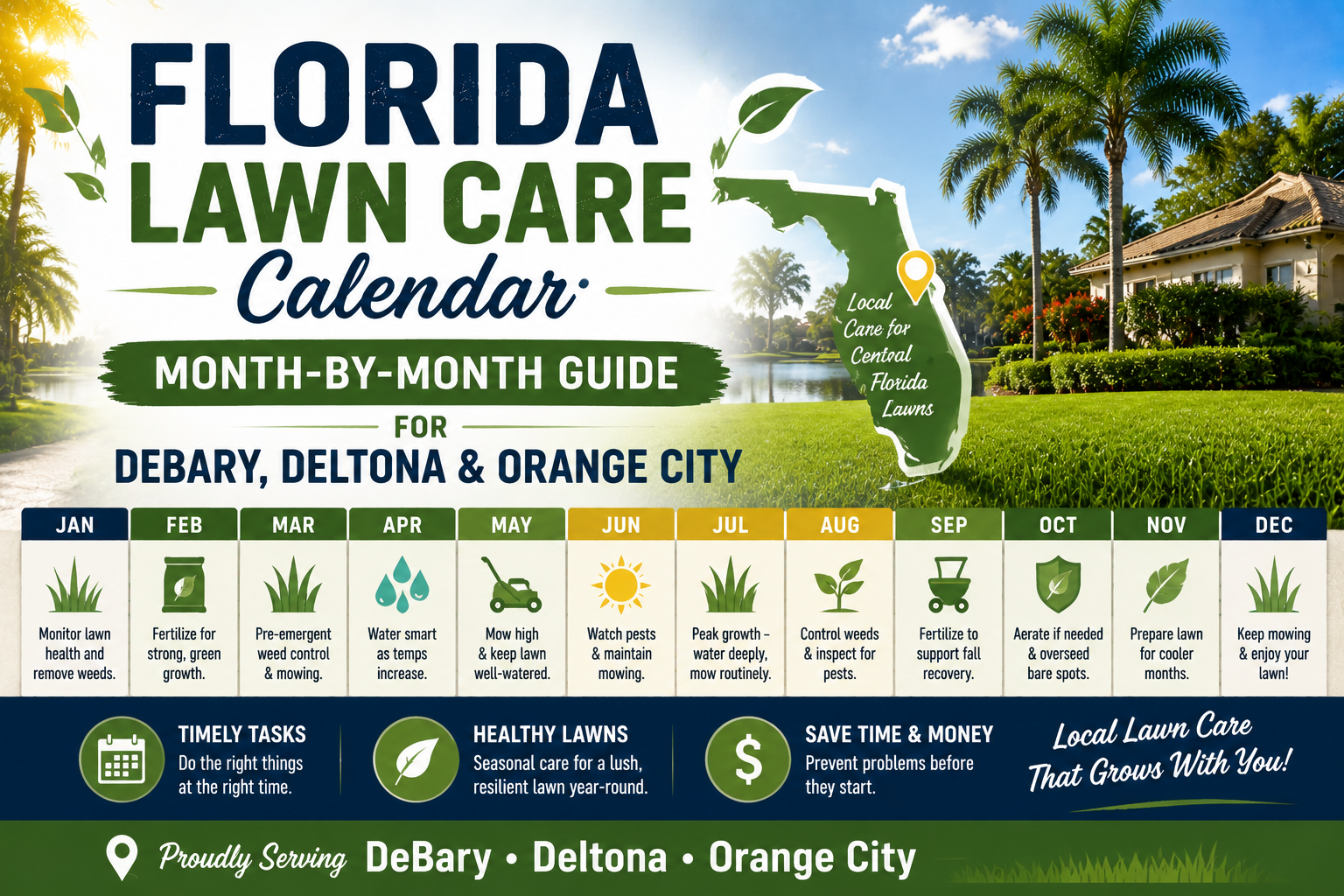
We offer same-day estimates and fair pricing, even during peak storm response. Contact Local Sod and Landscape to get on the schedule, or request a free quote online. Once your yard is restored, follow our Florida lawn care calendar to keep it healthy through every season.