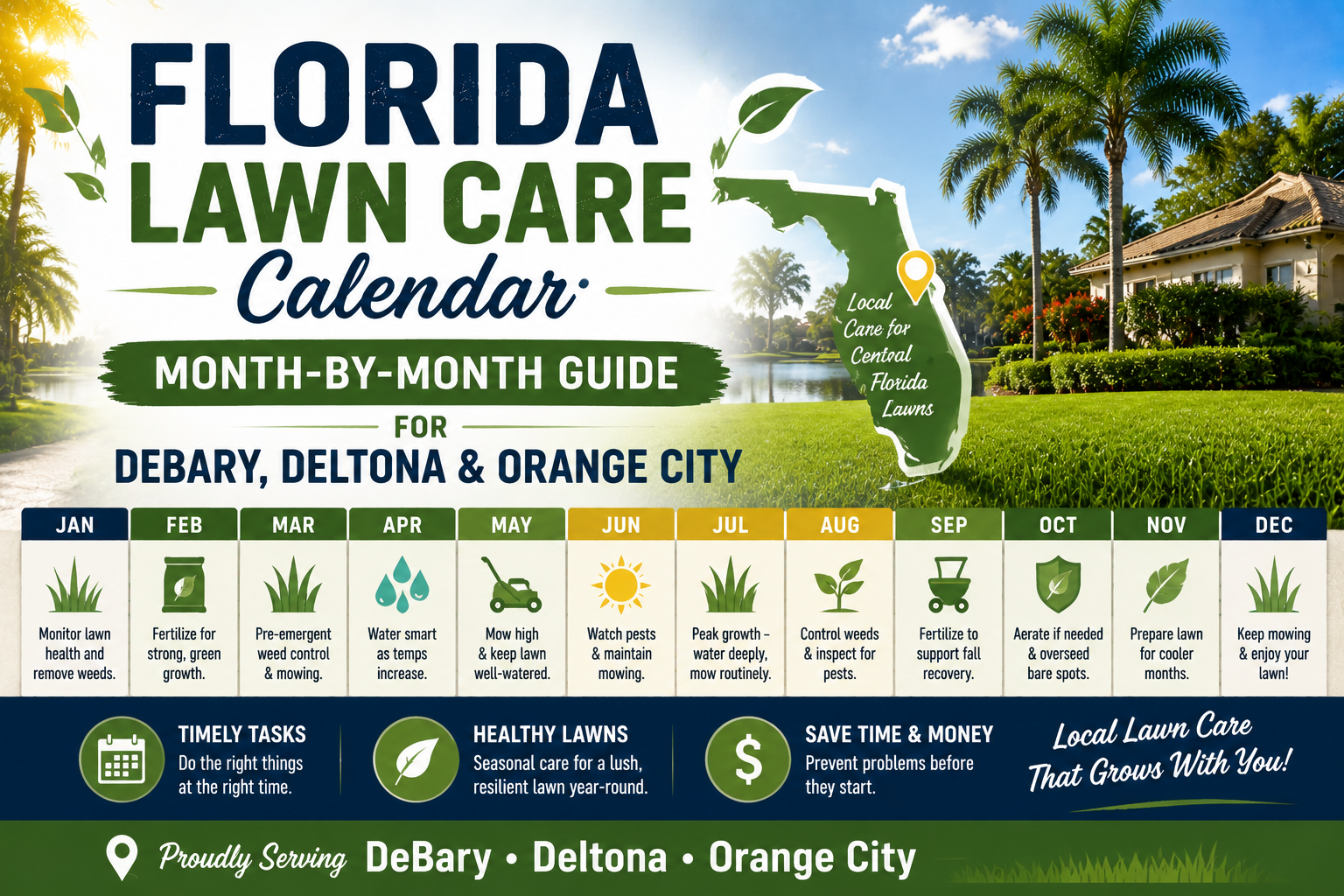




Lawn care in Central Florida does not follow the rules northern homeowners grew up with. Our grass grows almost year-round, our pests never fully go dormant, and our weather can swing from drought to flood in the same week. The homeowners with the best-looking lawns in DeBary, Deltona, and Orange City all do the same thing: they follow a calendar.
This guide is the calendar we share with every customer at Local Sod and Landscape. It is built for St. Augustine and Zoysia, the two grasses we install most often in Central Florida. If you have Bahia, the schedule is similar but lighter on water and fertilizer. Adjust as needed.
January: Cool-Season Maintenance
Central Florida lawns slow down in January but do not go fully dormant. Soil temperatures dip into the 50s, growth almost stops, and many Zoysia lawns turn straw-colored.
- Mow only when needed, usually every 3 to 4 weeks at most
- Skip fertilizer entirely. Cool-season feeding wastes nitrogen and can encourage weeds
- Apply pre-emergent herbicide in mid to late January to stop summer weeds before they sprout
- Watch for frost on cold nights. Healthy turf bounces back, but new sod under 60 days old needs protection
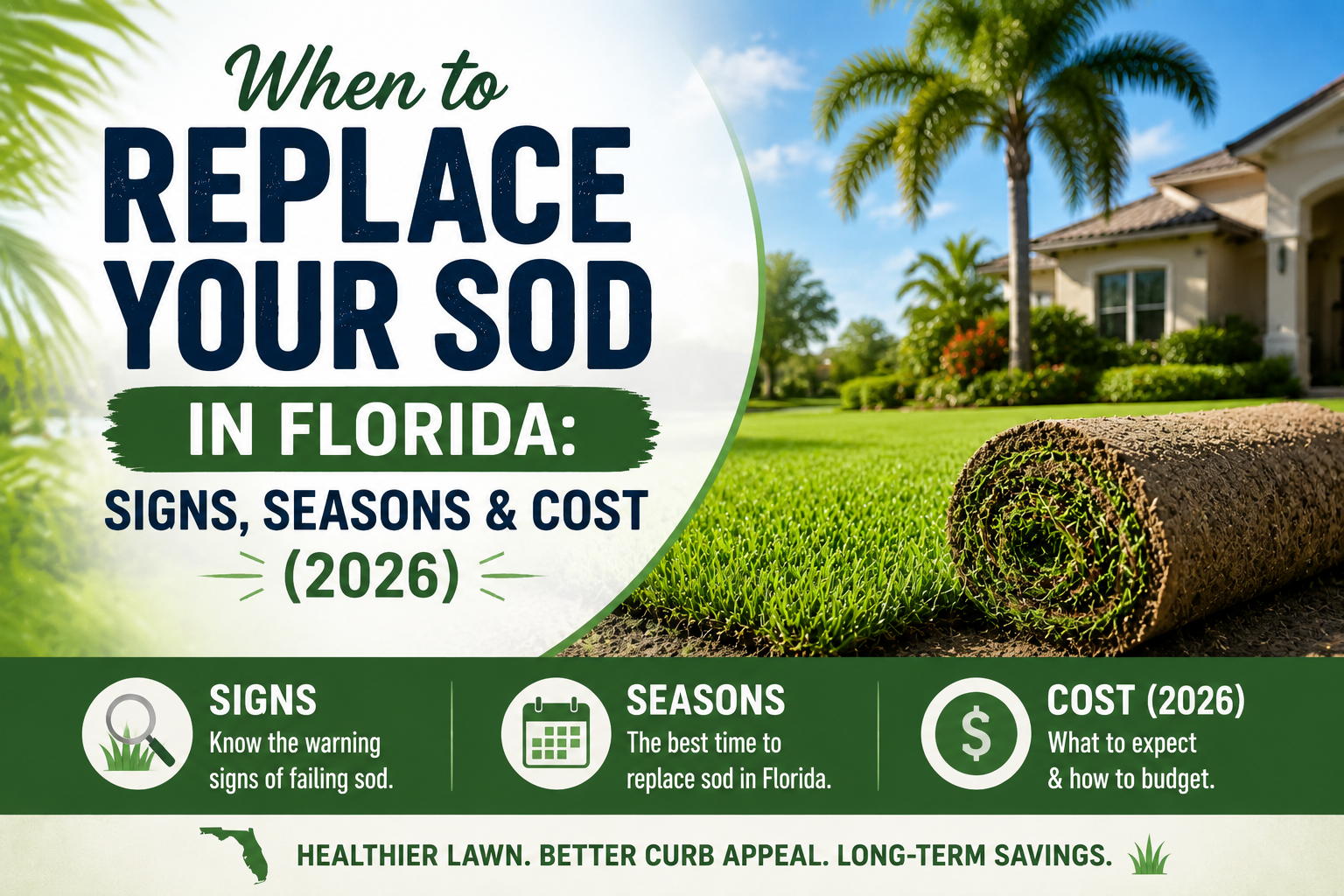
January is also a great time to plan major projects. Sod is in lower demand, contractors have shorter wait times, and the cooler weather is easier on crews. If you are considering a full lawn replacement, our guide on when to replace your sod in Florida covers timing in detail.
February: Pre-Spring Prep
Late February is the turning point. Daytime temperatures climb back into the 70s and 80s, and lawns start to wake up.
- Apply your second pre-emergent herbicide if you missed January
- Inspect irrigation systems before the dry spring season hits. Replace broken heads and check coverage
- Sharpen your mower blade or have it done. Dull blades tear grass and invite disease
- Remove leaf piles and debris that have been smothering grass over the winter
Avoid heavy fertilizing this month. Soil temperatures are still too low for the grass to use it efficiently.
March: Spring Green-Up Begins
March is when Central Florida lawns explode back to life. Growth picks up fast, and the maintenance season really starts.
- First fertilizer application of the year, ideally a slow-release product designed for Florida turf
- Resume regular mowing, every 7 to 10 days for St. Augustine, every 10 to 14 days for Zoysia
- Watch for chinch bug activity in St. Augustine, especially in sunny, sandy spots
- Spot-treat weeds that escaped pre-emergent. Avoid blanket spraying during green-up
March is also the best month of the year to install new sod in DeBary and Deltona. Soil is warm, rains are starting to return, and your lawn will have a full growing season to establish.
April: Active Growth, Active Pests
Heat and humidity are climbing, and so is pest pressure.
- Mow weekly. Keep St. Augustine at 3.5 to 4 inches, Zoysia at 1.75 to 2.5 inches
- Scout for pests every time you mow. Chinch bugs cluster in dry, sunny patches
- Begin standard irrigation, typically 1 inch per week including rainfall
- Spot-treat brown patch fungus if you see thin or yellowing rings, especially in shaded areas
Do not bag clippings unless you absolutely have to. Mulched clippings return nitrogen to the soil and reduce your fertilizer needs.
May: Pre-Summer Tune-Up
Florida’s rainy season starts in late May or early June. May is your last clean window before the daily afternoon storms.
- Apply a second slow-release fertilizer if growth has slowed
- Check irrigation timers. Many homeowners over-water once daily storms start
- Apply summer pre-emergent for warm-season annual weeds
- Inspect drainage. If May rains pool anywhere, you have an issue that summer will magnify
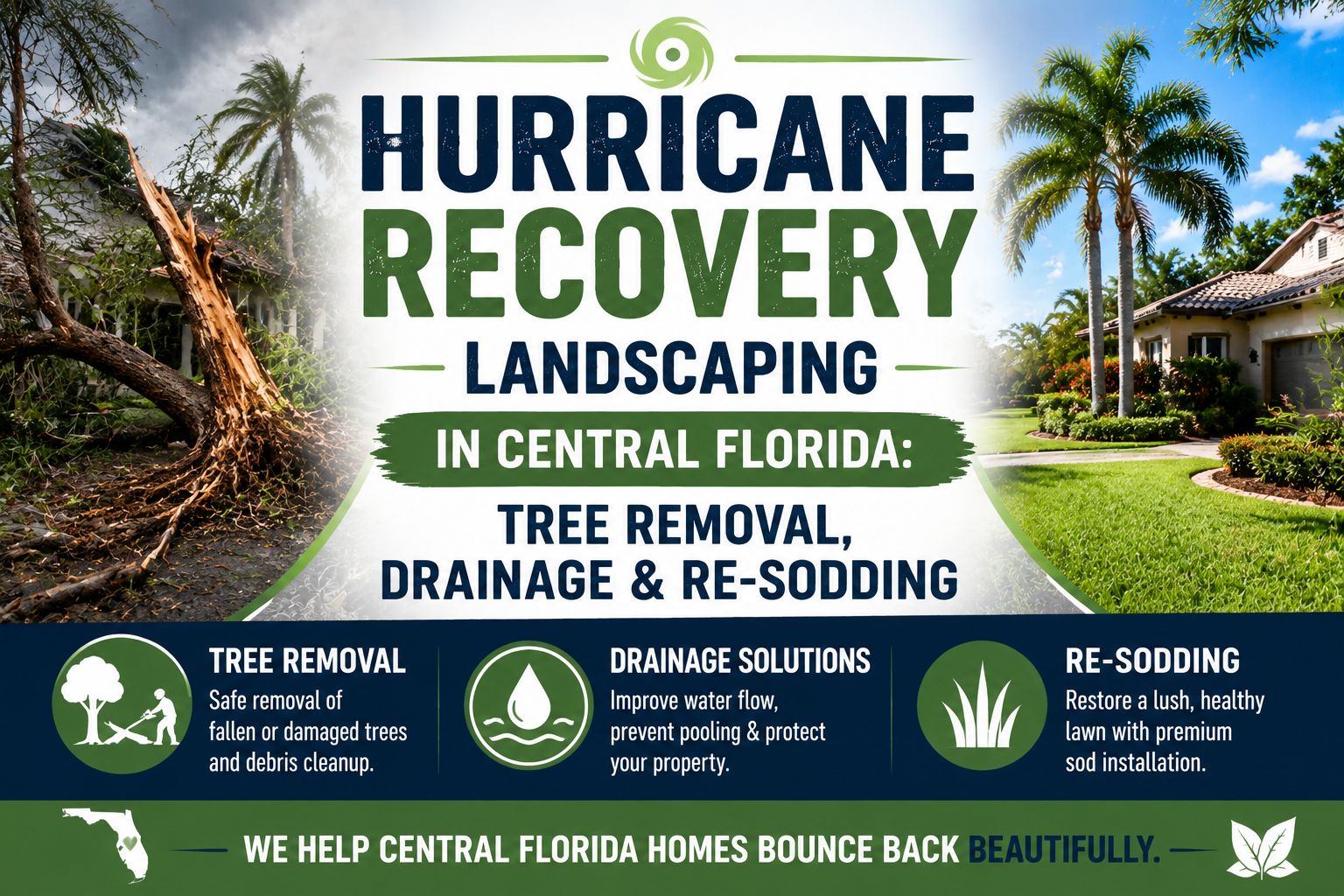
Standing water issues are best addressed before peak storm season. Our hurricane recovery landscaping guide covers French drains and grading in detail.
June: Rainy Season Begins
Daily afternoon thunderstorms become the norm. Your job shifts from watering to managing too much water.
- Set irrigation to skip days when over half an inch of rain falls
- Mow weekly without fail. Wet, tall grass leads to fungal disease fast
- Watch for sod webworms in St. Augustine. Look for chewed, ragged blades and small moths flying up when you walk
- Avoid heavy nitrogen fertilizer during peak rainfall, as it leaches into groundwater quickly
July: Heat, Humidity, Hurricanes
July is the hardest month on Central Florida lawns. High humidity drives fungal pressure, heat stresses turf, and the first hurricane threats appear.
- Continue weekly mowing, but mow in the morning when grass is dry
- Treat brown patch and gray leaf spot quickly. They spread fast in humid heat
- Trim back trees and large branches before peak hurricane season to reduce storm damage
- Consider a light iron application for color without pushing growth
Many homeowners ask us about emergency tree removal in July. The answer is the same every year: address overhanging or dead limbs before a storm, not after.
August: Hold Steady
August is about maintaining what you have, not pushing for new growth.
- Mow weekly, slightly higher than spring height, to shade roots from extreme heat
- Skip nitrogen fertilizer this month, especially with heavy rain
- Continue pest scouting. Late-season chinch bug damage often goes unnoticed
- Document any drainage issues from heavy storms for fall repair
September: Storm Season Peaks
September is historically the most active month for hurricanes in Central Florida. Lawn maintenance often takes a back seat to storm prep and recovery.
- Have a plan for clearing debris quickly so it does not smother turf
- Tie up or stake any new trees planted in spring
- Avoid major projects until after major storm threats pass
- Photograph the lawn before any storm so you have insurance documentation if needed
October: Recovery and Reset
Once storm season eases, October is the ideal month to repair, restore, and reset your lawn for the cooler season.
- Apply your final fertilizer of the year, focused on potassium for root strength
- Repair storm damage, regrade low spots, and replace damaged sod sections
- Apply fall pre-emergent for cool-season weeds like Poa annua
- Mow slightly lower as growth slows
October is one of the busiest months for sod installation in DeBary and Deltona. Cooler weather, lower water bills, and a long establishment window before winter make it a smart time to upgrade older grass. See our best sod for Central Florida guide if you are weighing options.
November: Slow Down
Growth tapers off, and so does maintenance.
- Mow every 10 to 14 days as growth slows
- Skip nitrogen fertilizer for the rest of the year
- Reduce irrigation. Cool nights mean lawns hold moisture longer
- Rake or mulch fallen leaves to keep them from smothering grass
December: Wind Down
December is mostly maintenance and observation.
- Mow only as needed, often once or not at all
- Drain irrigation systems if a hard freeze is forecast (rare but possible in Volusia County)
- Plan next year’s improvements: drainage, new beds, or a sod upgrade
- Sharpen mower blades and service equipment over the winter break
Common Mistakes Across All Seasons
Even with a calendar, three mistakes show up in almost every Central Florida yard. Watch for these and you will be ahead of most of your neighbors:
- Over-watering. Most lawns need much less water than homeowners give them, especially during the rainy season. Brown-tipped grass after weeks of rain is usually a fungus issue, not a water issue.
- Mowing too short. Scalping St. Augustine below 3 inches stresses the grass, exposes the soil to weeds, and dries out the root zone fast.
- Ignoring drainage. A wet spot in May becomes a dead spot in September. Address standing water early before it kills the surrounding turf.
- Skipping pre-emergent. Once weeds are visible, you have already lost the battle for the season. Pre-emergent timing in January and October is the single best weed control investment you can make.
- Fertilizing during heavy rain. Nitrogen leaches straight through sandy Central Florida soil into groundwater. Time fertilizer applications between storms.
When to Call a Professional
A consistent monthly routine handles 90 percent of lawn care. The other 10 percent is where most homeowners need help: drainage corrections, full sod replacement, post-storm cleanup, and major landscape redesigns.
We have walked thousands of yards across DeBary, Deltona, Orange City, Sanford, and DeLand. If you are dealing with persistent problems that month-to-month maintenance does not fix, contact Local Sod and Landscape for an honest assessment. We will tell you whether you need fresh sod, drainage work, or just a few targeted fixes. Request a free quote and we will be out the same day to take a look.