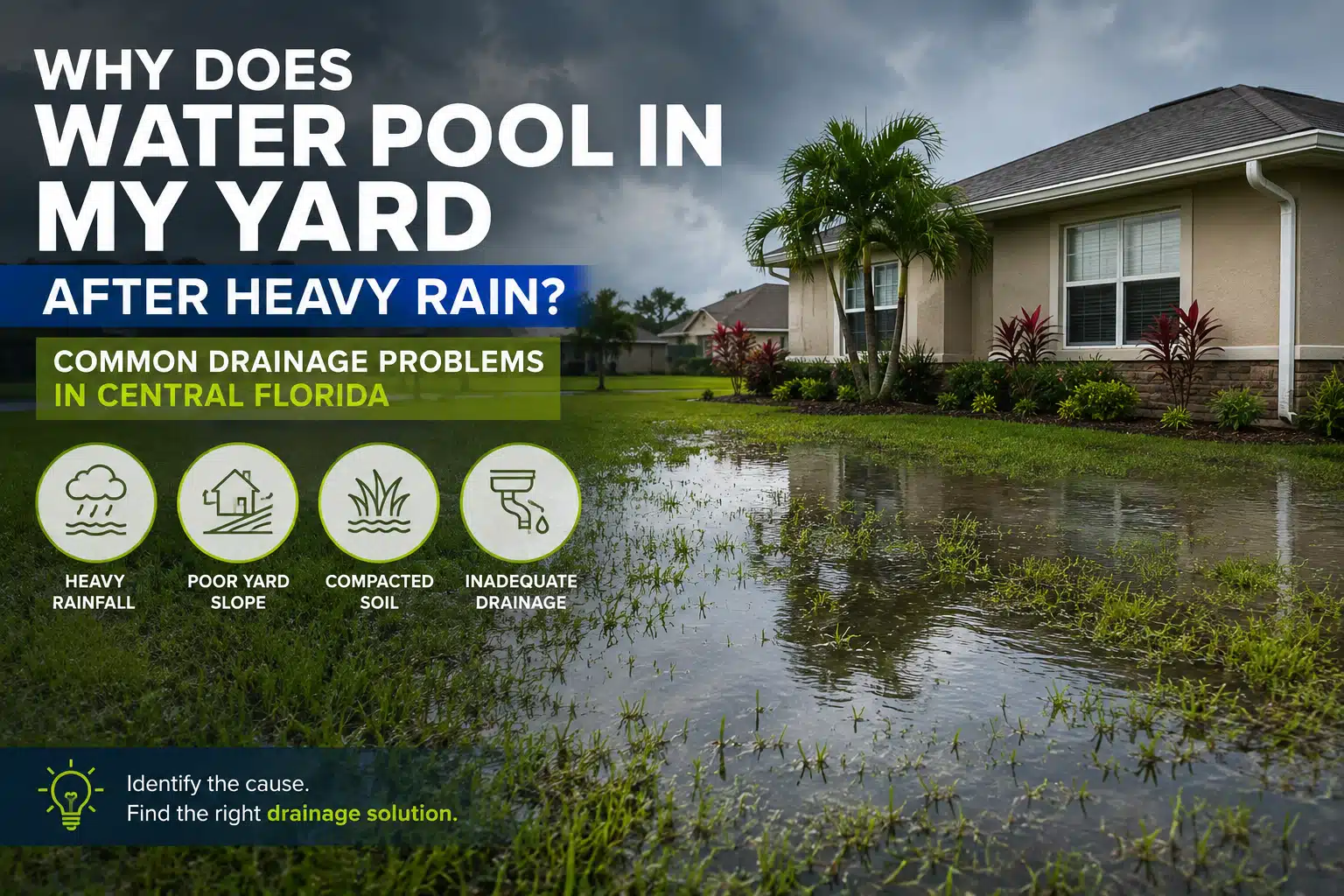



You’re a homeowner in Central Florida. You love your yard—the lush green grass, the palms swaying in the breeze, the peaceful retreat you’ve created. But lately something’s been off: patches of soggy soil, water lingering by your patio, grass thinning in spots. You worry: is this just a seasonal quirk, or a warning that a drainage disaster is looming?
At Local Sod & Landscape, we understand how Florida’s climate, flat terrain, and intense rainy seasons can conspire against your yard. We don’t want you to lose your dream landscape to avoidable water damage. Let us help you spot the red flags early—before small problems spiral into costly repairs.
The Hero’s Problem: Drainage Issues You Can’t Ignore
Your yard doesn’t lie. It will always tell you when something is wrong—but often subtly at first. Ignoring early warning signs won’t make them go away; instead, they’ll worsen. Unfortunately, in Central Florida’s heavy rainfall environment, untreated drainage problems can lead to:
- Soil erosion or washouts
- Tree root damage
- Foundation or patio settling
- Turf loss or disease
- Mosquito breeding grounds
- Damage to hardscape, pavers, and retaining walls
These are the failures you want to avoid.
Recognize the Early Warnings (Before it’s too Late)
Here are common warning signs of drainage issues in Florida yards—things you might notice before your neighbors do:
● Standing water or soggy patches, even days after rain
If water lingers against your foundation, on your patio, or in yard depressions, something is off. Water should recede within 24 to 48 hours in typical Florida soil.
● Grass thinning, dying, or inconsistent growth
Plants and turf can drown if roots stay saturated. Uneven patches often mark areas where water is pooling.
● Mosquito hotspots
Stagnant water is a breeding ground. If one area of your yard always has mosquitoes even when others don’t, that’s a clue.
● Erosion, ruts, or gullies forming
Heavy downpours in Florida can carve channels in soil that’s unprotected or already saturated.
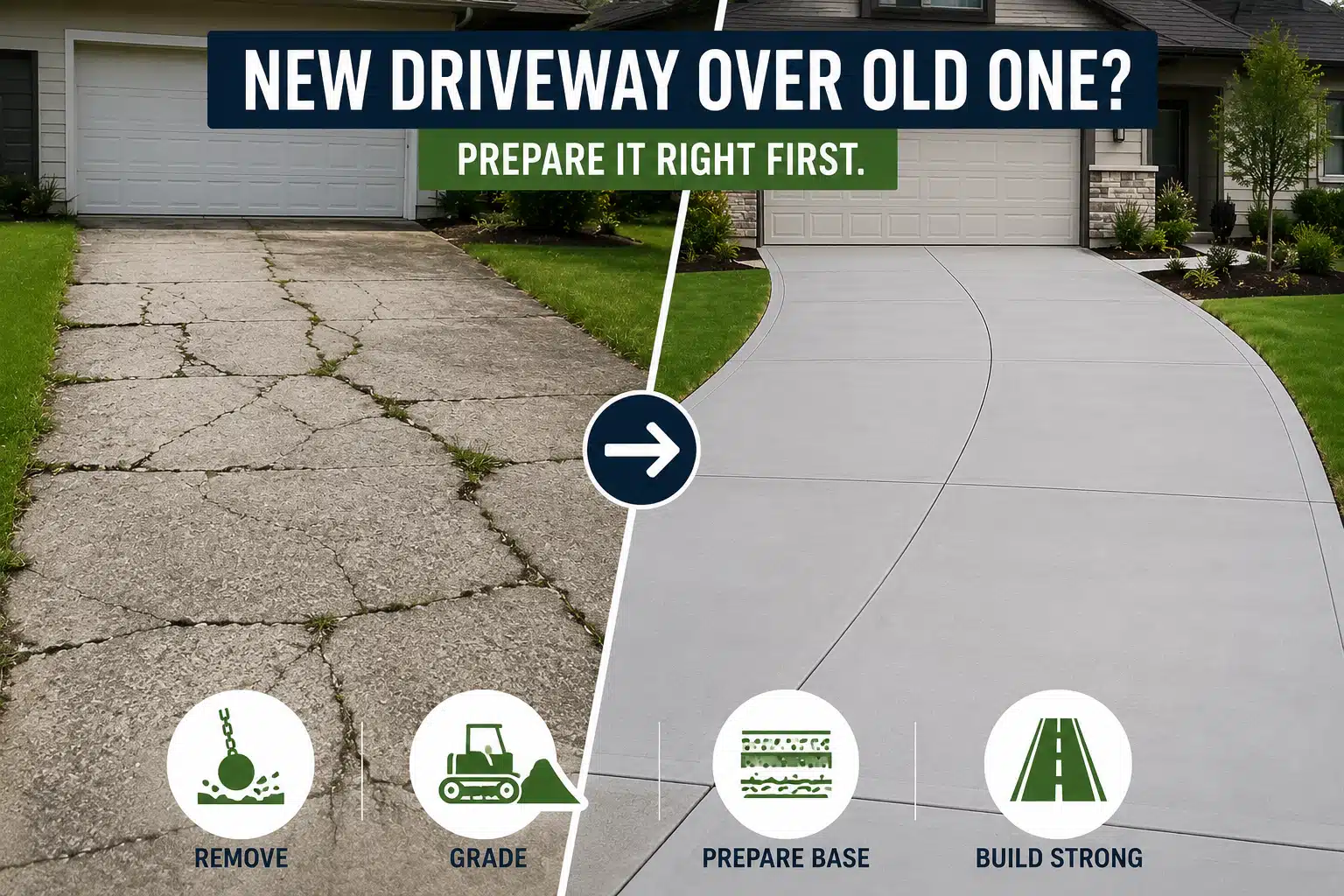
● Depressions, dips, or puddles in paving/hardscape
According to our friends at Slot Drain, if your patio or driveway develops low spots, water will collect there, weakening the base underneath.
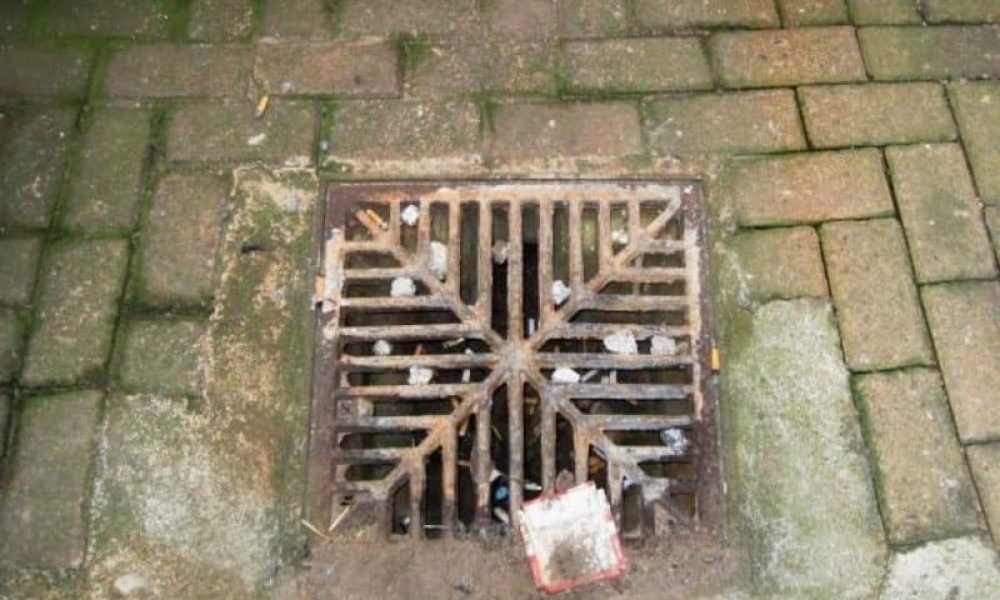
● Root intrusion or clogged pipes
Tree roots and debris can invade perforated pipe systems, blocking drainage.
● Soil compaction or poor absorption
Even in sandy Florida soil, compaction from heavy foot traffic, construction, or poor soil amendments can impede drainage.
● Grading issues
Your yard should slope away from structures. If alterations, new planting beds, or soil movement have reversed flow, water may funnel toward your home.
Why This Happens—Especially Here in Central Florida
Florida presents unique challenges:
- Flat terrain and low slopes mean water has less natural escape and tends to stagnate.
- Sandy soils drain quickly, but when compacted or layered over clay, water can’t absorb properly.
- Heavy seasonal rains and thunderstorms can overwhelm even a moderately designed system.
- Landscape modifications—such as adding beds, retaining walls, and hardscape—often alter surface flow and exacerbate existing problems.
All that means vigilance is key. Catching problems early is much easier and cheaper than retrofitting after extensive damage.
The Plan (Your Simple Roadmap)
If you notice any red flags, here’s what to do:
Step 1. Inspect proactively
Take a walk with your rain boots after a storm. Look for puddles, erosion, soggy spots, or uneven turf. Use a shovel to test infiltration: dig a small hole, fill it with water, and measure how quickly it drains.
Step 2. Map the problem zones
Mark areas of frequent saturation, low spots, or standing water. Compare your original grading plan or property layout to see where the flow is wrong.
Step 3. Contact Local Sod & Landscape
We’ll come out, walk the property with you, and diagnose the underlying causes (soil compaction, grading, clogged drains, etc.).
Step 4. Implement scalable solutions
We don’t believe in one-size-fits-all. Options may include French drains, regrading, catch basins, trench drains, permeable hardscaping, soil amendments, or strategic redirecting of downspouts.
Step 5. Monitor & maintain
Once installed, we’ll show you how to maintain drains, clean access points, monitor shifts, and keep roots out of your system.
Success: What You Gain and What You Avoid
When you act early, you’ll:
- Preserve turf, plants, and hardscape
- Prevent root and foundation damage
- Keep mosquitoes and pests in check
- Avoid costly after-the-fact repairs
- Enjoy a yard that handles rain gracefully
If you don’t act, the “failure” risks are clear: erosion eating your landscape, settling of pavers or patios, soggy lawn patches you can’t fix easily, and potentially severe structural issues.
Final Thought (Reinforcing Your Role as Hero)
You’re not helpless against Florida’s rainy season—you’re the hero of your own property story. But you don’t have to go at it alone. At Local Sod & Landscape, we’ve helped dozens of Central Florida homeowners spot small drainage problems early and fix them cleanly, elegantly, and cost-effectively. Let us guide you—and together, we’ll protect your investment, your curb appeal, and your peace of mind.